

Twenty-eight years ago, Tim Cook walked into Apple.
Last week, he was asked whether he planned to leave. He answered: “I can’t imagine life without Apple.” He didn’t say “I’m not ready to leave yet” or “I can’t see myself retiring quite yet.” He said he could not imagine life without Apple. I am pondering that statement longer than I expected to.
I spent eleven years at Apple.
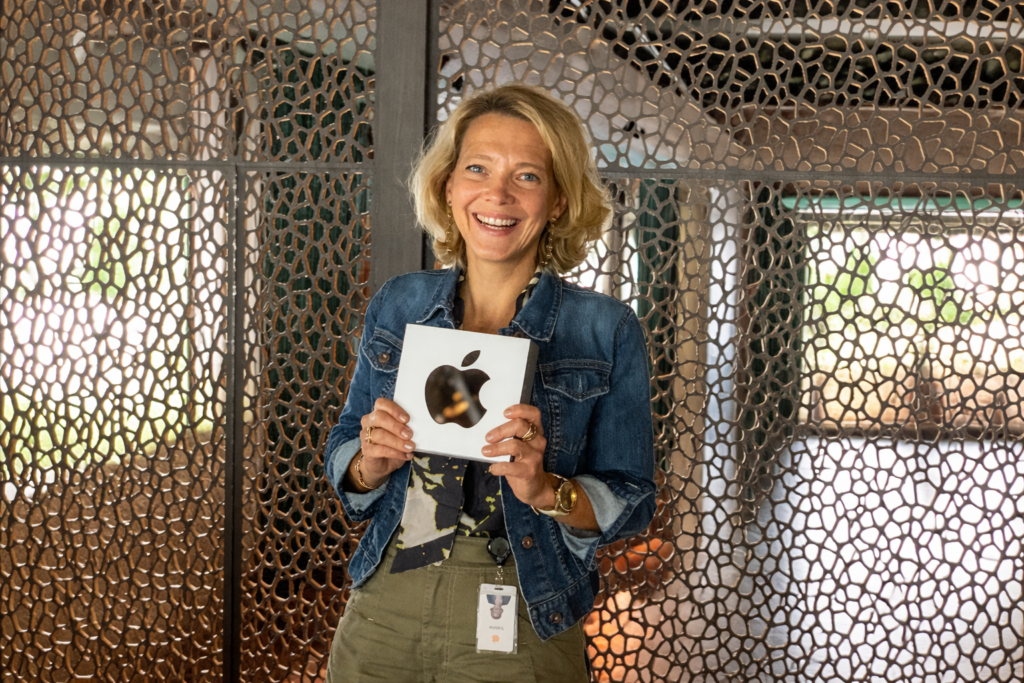
Seven in Paris and London, then a chapter away, then four more in Miami. I left Apple twice. And I can tell you that leaving, even chosen and deliberate, was one of the hardest things I had to navigate professionally. Never mind what I was building next. It felt like grief.
Aura and ego
The aura that comes with that brand shines on its employees, and if I am honest, some of it is ego. When someone asks what you do and you say Apple, you do not have to finish the sentence. That name does the work, and more. The admiring smiles, the flicker of envy, the conspiratorial questions about the next secret launch, the inevitable “what is it really like in there?” This scenario becomes part of how you define yourself. The aura becomes yours. A fleeting shiny perk that is as binding as a great salary. There was a saying back then: there is a life after Apple. A reassuring mantra, because when you leave, so does the aura. And it feels like a fracture.
Not quite Kafka’s Metamorphosis
You do not wake up one day with the company as your identity. The merger happens gradually. It starts accumulating from your very first role, when the question “Who are you?” is answered proudly with a shiny new job title. You start speaking the corporate jargon at dinner with your friends. The values on the wall start to feel like your values, which they may well be. Until the day you try to locate yours, independently, and fail.
The surrender
Apple is an extreme case because the brand is so extraordinary and so mythologized, that the pull is stronger than most. But the dynamic is not unique to Apple. Any mission driven organization is demanding enough to ask for your full self. Which we give, willingly, without ever negotiating the terms of this surrender.
Tim Cook is an exception, perhaps one of the only few who can be Apple forever. Most of us, at some point, will leave our organization. And confront the fact that, when there is soon no name to name-drop, we must rebuild a value proposition and an identity that are fully our own. And there, very much like Kafka’s Gregor Samsa, it can feel ugly.
If you found yourself in this, it is worth a conversation.
